Why chef Damian D’Silva fights for the soul of Singapore's food heritage
Information technology's like shooting fish in a barrel to be intimidated by Chef Damian D'Silva. His towering height means he will be looking downward at you. And if you've defenseless the 62-year-quondam gauge of the recently concluded MasterChef Singapore, y'all'd know what he meant when he said he could probably "smile more than", if he could do over his time on the show.
But this prima facie impression dissipates one time you have the time to sit down at his feet – or rather, at his feast-laden tabular array at the restaurant Folklore – and listen to the cornucopia of stories that spill from his mouth.
That'southward when you realise that anyone with whatever measure of confidence will always run the chance of rubbing someone or other the wrong way – and not fear that at all.

"Chilli, rice, chicken – name me one stall that gets information technology all correct. It doesn't brand sense," he asserted, during a teatime conversation nosotros had almost the state of chicken rice in Singapore.
"I swear to you, if I sit downward for a month and I do rice, chicken and chilli, I would come up with the perfect rice, craven and chilli. I would. So why can't they practice it? My grandfather did perfect chicken rice, and he did then many other things perfectly."
READ> Kitchen Stories: Why practise so many chefs have tattoos?
Grandfather, THE CULINARY COLOSSUS
"Granddad", as it turns out, was the single well-nigh important influence in his culinary journeying, in spite of the fact that he died when D'Silva was just 19.
As a male child of eight, he was non immune in the dining room when his retired grandfather had his friends over. But he was allowed to fry upward and serve food to the table. And because many of Granddad'due south friends were influential chefs, it was pregnant when he performed his tasks well – and peculiarly then when Granddad's own prowess in the kitchen was acknowledged by everyone in the community.
But Grandpa was the most reluctant of teachers because, as D'Silva afterwards realised, he wanted to test the boy's dedication. He would never instruct just watch out of the corner of his eye to run across if his grandson was doing his tasks correctly. And and then, learning took place just through careful observation.
When people tell me a dish is perfect, I say, 'No, it'south not'. If it'due south perfect, you are doing the same matter over and over over again. Where'southward the soul?
"I realised that he cut onions in different ways. If he wanted to break the onions downwards very quickly, he cut them confronting the grain. If he wanted to melt them for a long time, he cut them with the grain," D'Silva recalled.
"He was a mentor in many different ways, not only in cooking. He fabricated me call back. He made me employ all my senses," said the chef.
Even though D'Silva never knew what was going on in his grandfather's caput, "when he did something, information technology was with all his heart," he said. "He didn't do it halfway. It had to be meliorate than what he did the concluding time. That'due south how I learned well-nigh imperfection in cooking."
Information technology seems like a contradiction, but to this chef, imperfection is the highest ideal. "When people tell me a dish is perfect, I say, 'No, it's non'. If it's perfect, you are doing the aforementioned thing over and over once more. Where's the soul?" he asked.
I tell you lot, I've eaten chicken rice in Nippon that'due south better than Singapore's.
"When it'south imperfect, and it'due south better the second time y'all make it, you question yourself. And when you're cooking it for the fourth time and you tin sense that it's going to be amend, at that place'south this smirk on your face. And when you try it, information technology'south better than all the other times that you cooked it. That is imperfection. That is what I strive for. And that is what I saw in my granddad."

The dish that best exemplifies that philosophy, said D'Silva, is Feng, a delicate stew of hog's offal that only makes an advent at Christmastime. "Feng this yr is very unlike from Feng concluding year. This year, it'south better. It's got more nuances; the texture is and then much better. The spices are pronounced, but not overpoweringly then," he said. "It'southward non that I didn't put heart into information technology concluding year. This twelvemonth is just different."
Why isn't it on the menu all year round? Well, because it's so labour intensive. Non just is the offal chopped up into tiny pieces measuring mere millimetres, information technology's also stewed in a blend of 18 different spices. The specialised Feng curry powder is likewise made from scratch. In fact, D'Silva makes all the different back-scratch powders for each of his curry dishes – never skimping on fourth dimension, effort and quality ingredients.
READ> Our Gastro Legacy: Singapore's oldest family unit-run eating place, Spring Court
'WHY ARE You lot So STUPID, DAMIAN?'
At his previous restaurant, Soul Kitchen, D'Silva used to go upset when customers would pay S$18 for a plate of aglio olio just balked at paying S$12 for beef rendang that took far greater time and effort to prepare.
It's a conundrum that fifty-fifty a beau chef couldn't understand.
I think we've lost our taste for heritage food. I think culturally, everything has been removed.
About a twelvemonth ago, a chef from France asked to exist allowed to work in Folklore's kitchen for a calendar week. "The first day he came, we were doing CBBB, which stands for chilli, bawang, belacan and buah keras. Information technology's shallots, candlenuts, chilli and shrimp paste, blended up. We usually practice near 20kg at one time."
It'due south a process that requires frying the aromatics in very hot, smoking oil. D'Silva recalled: "As he was stirring, [splatters of oil] started to leap onto his hands. He said this is very painful. I told him, but gyre your sleeves down and continue working. After an hour, he said, 'This is besides difficult. Can I take a break?' This guy was 28 years old."

It doesn't assistance that diners don't seem to appreciate the price paid past the people who serve upward heritage food, said D'Silva. "When I went to Japan about v years ago, a good sushi eating place probably charged S$120 a head. Today, it'southward S$480. Why? It'southward the same restaurant. Why can't I sell my food at S$100 a pop?"
Turning the question to himself, he asked, "Why are you and then stupid, Damian? I use the best dried chillies. There are cheaper ones. Merely I use the best. And it'due south sad that people don't see that."
"I think we've lost our taste for heritage food. I recollect culturally, everything has been removed. We used to take cobblers. Nosotros used to accept joss-stick makers. We used to have sign makers. We used to have potters… these people are all gone."
These jobs, he said, are "the soul of a state", just like the grandfathers and grandmothers who used to whip up dishes at home. "Nosotros have not lost our identity per se, just we've forgotten who we are."
THE FIGHT Confronting FORGETTING
Today, D'Silva is one of Singapore's strongest crusaders in the fight against our collective culture's memory loss. At Folklore, he resurrects heritage dishes such as Eurasian Singgang, a long-lost Eurasian dish of de-boned wolf herring; and Mulligatawny, an Anglo-Indian soup of shredded chicken and spices.
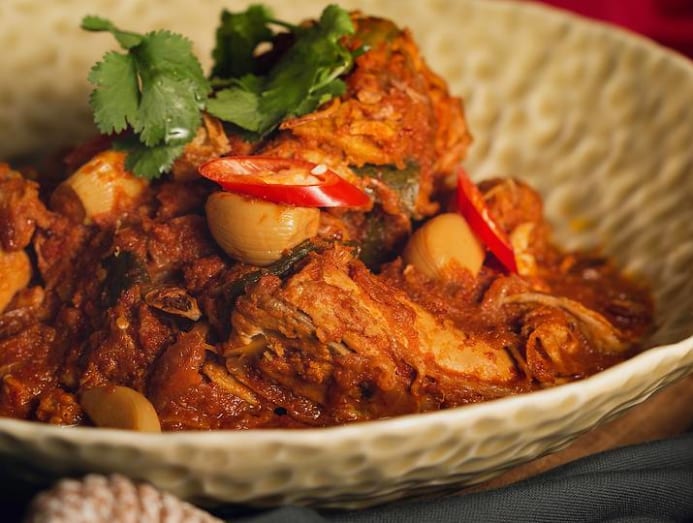
Many of his dishes were saved from the brink of oblivion via Granddad'southward personal recipe volume, which was just every bit cryptic as the human himself – each recipe is merely a list of ingredients. "The worst matter is that sometimes, it says, i and a half cents worth of this and that. Back then, with one cent, yous could swallow. How do you try and figure that out?" he chuckled.
"I spent more than nine months studying Granddad's cookbook, and and then re-writing and testing all the recipes. I had the most fun. Information technology was not but well-nigh testing – it was about eating. Is this how it'due south supposed to taste? And the more you dug up the memories, the more you became emotional. Why didn't I sit down with him and enquire him all these questions? It was too late. He was dead."
Our Gastro Legacy: The indelible appeal of Rang Mahal
In his mind, what makes us Singaporean is our cultural diversity. But "if we don't cover whatever little we have left, where are we going to exist in the next twenty years? We've got satay that's really terrible. When I go to Malaysia, I become satay that's and so much better – or even Indonesia, for that thing."
And, back to the prickly subject area of craven rice: "I tell yous, I've eaten chicken rice in Japan that'southward better than Singapore'south."
An artist is an artist whether he paints, whether he's a potter, whether he cooks. You're driven. That's the kind of madness. I know a lot of chefs out there who do that. Merely how many exercise it not for coin?
These would have been provocative words if they hadn't been said with many sighs and a lump in his throat.
"The middle and soul of who we are – the heritage – what have we got to prove? Yeah, we've got a lot of hawkers. But what about the Hock Chew, the Teochew, the Cantonese, the Hokkiens, the Hakkas – where's that nutrient all gone to? And then, the Malays – is it just nasi padang? What about the Boyanese? I hateful, at that place's so much. Who's going to brand an effort not only to document, but to make sure that it'southward not forgotten?"
Well, at least nosotros have you, we pointed out. "I'thou only one person," he lamented, with a express joy. "To go a chef, you must take a certain amount of madness, you know. To defy yourself, to go above and beyond your tiredness, to work 36 hours without sleep, to take all the criticism with heart, and then effort and come up up with things that are better.
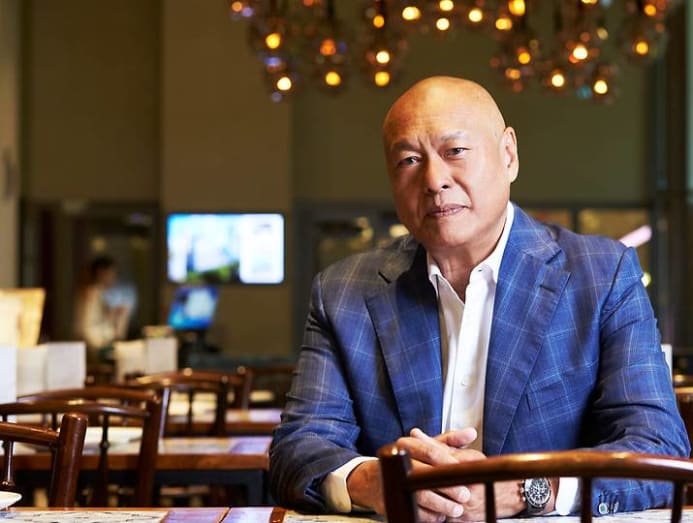
"An artist is an artist whether he paints, whether he'south a potter, whether he cooks. Yous're driven. That'due south the kind of madness. I know a lot of chefs out in that location who practice that. But how many do it non for money?"
He continued: "Where'due south the happy food now? Nutrient that you put in your mouth and it brings back so many memories and makes you happy? Some mums don't cook whatever more than. I know it'southward non their mistake. I know they don't have the time. But we can't lose our heritage. So that's why I do this."
"It's not for me," he added. "I think it's for my Granddad."
READ> Confessions of a wannabe social media 'influencer': The time I tried to sell noodles
Source: https://cnalifestyle.channelnewsasia.com/dining/chef-damian-d-silva-folklore-eurasian-heritage-food-cuisine-252216
0 Response to "Why chef Damian D’Silva fights for the soul of Singapore's food heritage"
Post a Comment